
A new study by University of New South Wales paleontologist Professor Mike Archer and his colleagues revisits a long-debated question in Australian prehistory: Did Indigenous Australians hunt the continent’s giant, now-extinct megafauna, or did they engage with fossils in a more symbolic and scientific way?
Revisiting the “Smoking Gun” Fossil
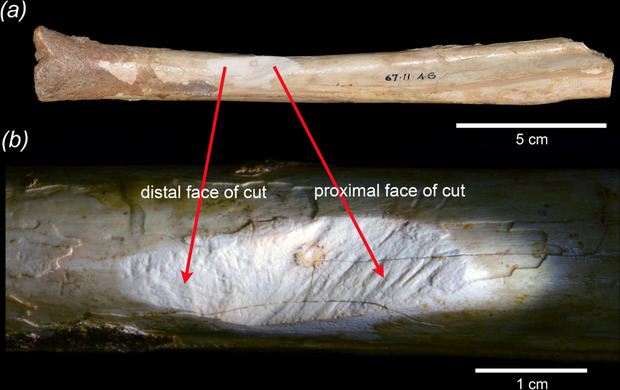
At the heart of this re-examination is a fossilised leg bone (tibia) of a giant kangaroo, discovered in Mammoth Cave, southwestern Australia, around the time of World War I. For decades, archaeologists believed that a distinctive cut on this bone was clear proof of butchery by early humans. This interpretation supported the theory that First Peoples contributed to the extinction of megafauna by hunting them.
However, with advances in technology, Archer’s team used high-resolution 3D scanning and microscopic analysis to study the cut again, without damaging the bone. The tibia underwent micro-CT scanning to reveal internal fractures and shrinkage cracks, revealing nine longitudinal cracks and one transverse fracture. This analysis suggested that the cut mark occurred after the bone was fossilised and dried, not during fresh butchery.
They discovered the cut was made after the bone had already dried and fossilized, meaning it happened long after the animal had died, and not while it was alive and being butchered.
Casts doubt on extinction theories
This revelation casts doubt on the claim that Indigenous Australians directly caused megafaunal extinction through hunting. The study re-opens the question, suggesting humans may not have been the decisive factor in these animals’ demise.
While the study does not dismiss the possibility that Indigenous Australians hunted megafauna, it stresses the need for stronger fossil evidence before such a hypothesis can be conclusively supported. The single worn cut on the Mammoth Cave bone, long interpreted as butchery evidence, is now understood as a later modification.
“We conclude that the cut on the Mammoth Cave sthenurine tibia, which was originally regarded to be evidence that First Peoples had either killed or butchered this individual, was indeed produced by human actions but on a probably already fossilized bone”, the researchers wrote. “This adds to previous indications that First Peoples were interested in and collected fossils”
“This is not to say that it did not happen, just that there is now no hard evidence to support that it did. What we can conclude is that the first people in Australia who demonstrated a keen interest in and collected fossils were First Peoples, probably thousands of years before Europeans set foot on this continent.”
Climate change and other environmental factors likely played a major role, especially since some megafauna disappeared long before humans arrived, while others coexisted with humans for thousands of years.
Fossils as Cultural and Symbolic Objects
Interestingly, the research also analyzed a fossil tooth “charm” belonging to a giant marsupial species, Zygomaturus trilobus, given to archaeologists in the 1960s by a Worora Nations man. The man came from the Kimberley region, far away from where the tooth likely originated in Mammoth Cave. 3000km far.
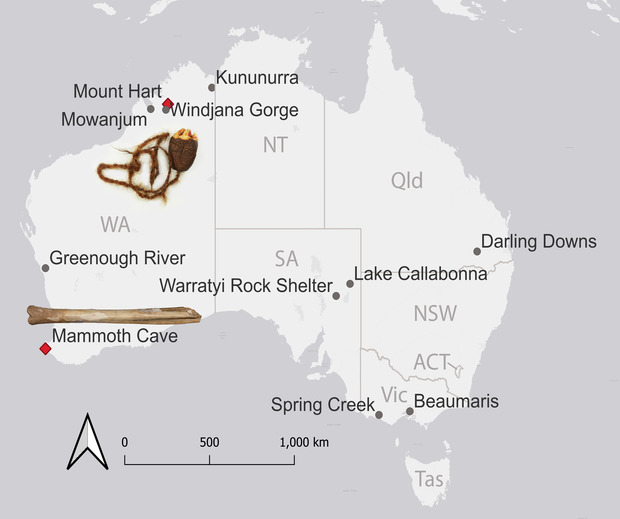
Location of localities noted in the paper. The cut tibia and the Zygomaturus trilobus Charm are shown near the areas where they were obtained
The wide geographic separation of this fossil suggests Indigenous Australians either traded or carried such fossils across great distances, possibly valuing them as cultural or symbolic objects. In fact, the paper notes that “all of these specimens were said by the First Peoples individuals who gifted them in the Kimberley region of northwestern Western Australia to be ‘Charms’ capable of increasing the availability of food”
It could also mean that fossil collection was practiced potentially thousands of years before European scientific fossil collecting. This points to the idea that Australia’s First Peoples may have been the continent’s first paleontologists, collecting and appreciating fossils long before Western science took an interest.
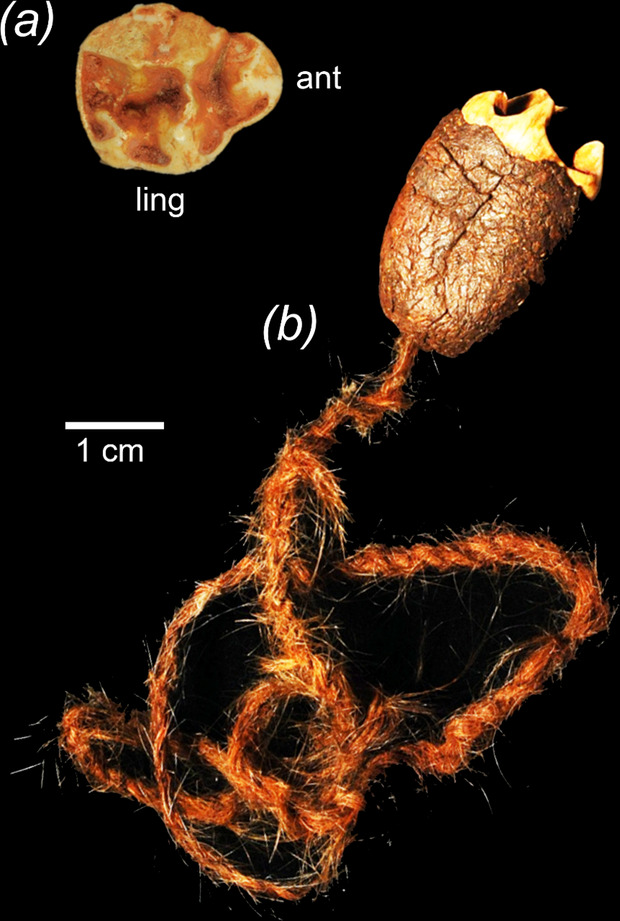
The Kimberley Charm, containing a right upper third premolar (RP3) of the extinct diprotodontid Zygomaturus trilobus (a, occlusal view), mounted in spinifex resin and with attached string made of hair (b).