Second Tooth Confirms Bird-Like Troodontid Dinosaurs Roamed Southern India
Paleontologists have found a second troodontid fossil tooth from Tamil Nadu. This confirms that troodontids, small bird-like dinosaurs that were previously known almost entirely from the northern continents, lived in India at the end of the Age of Dinosaurs.
The tooth comes from the Kallamedu Formation of the Cauvery Basin, in rocks about 70 to 66 million years old, and it means the only two troodontid fossils known from the ancient southern supercontinent Gondwana both come from this one Indian site.
A Dinosaur Out of Place
Troodontids were small, lightly built feathered theropods. They were close cousins of velociraptors and they are both part of the group of dinosaurs most closely related to birds (which already existed, by the way).
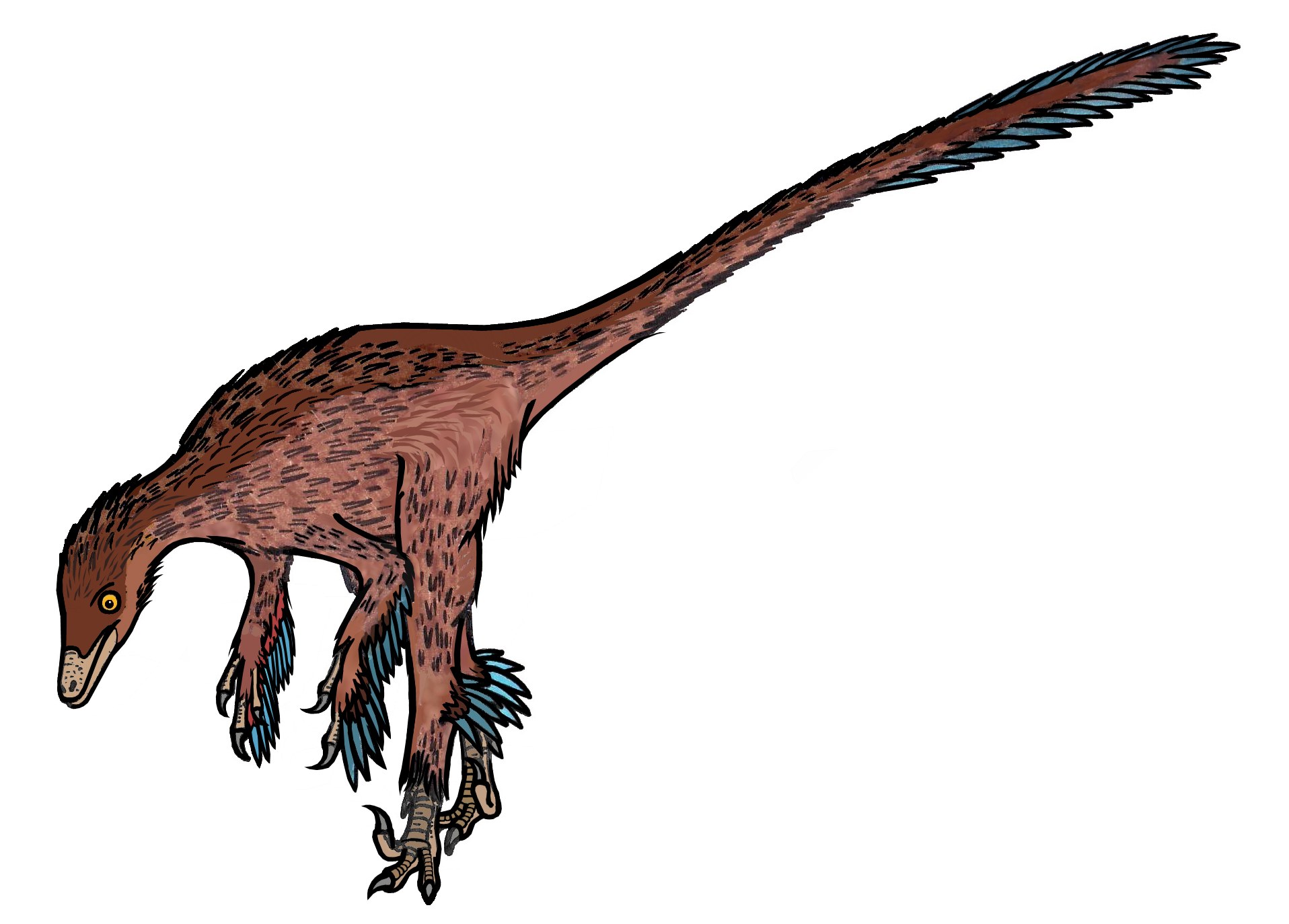
An artist’s life restoration of a North American troodontid (drawn as Troodon, possibly closer to Stenonychosaurus), shown for comparison; it does not depict the Indian animal. Image credit: Conty / Wikimedia Commons / CC BY-SA 4.0 (converted to JPG)

Troodontid fossils are known mainly from Laurasia (current North America, Europe and non-Indian Asia). The only exception was one single solitary tooth, specimen DUGF/52, reported in 2013 by a team including Goswami and Prasad. That tooth was the first (and until just now the only) troodontid from Gondwana. It extended the group’s known range by nearly 10,000 km.
Now, new fieldwork at the same locality has turned up a second, “better-preserved” tooth, DUGF/168. But how do we know from a tooth that it’s the same kind of animal as something found 10,000 kilometres away? It’s a tooth, after all.
Scientists have the same concern, and admit fairly that it’s very difficult to ascertain the animal from the tooth. Especially when the claim is as wild as a troodontid in India. The team undertook a detailed comparative exercise with known troodontid teeth. The research team took seven measurements from both teeth and used two statistical methods to compare those numbers with teeth from known groups.
The results reaffirm that the 2013 tooth belongs to an indeterminate troodontid, and place the new tooth in the same family. The new specimen shows a “close morphological resemblance to the North American genus Troodon,” the researchers wrote.
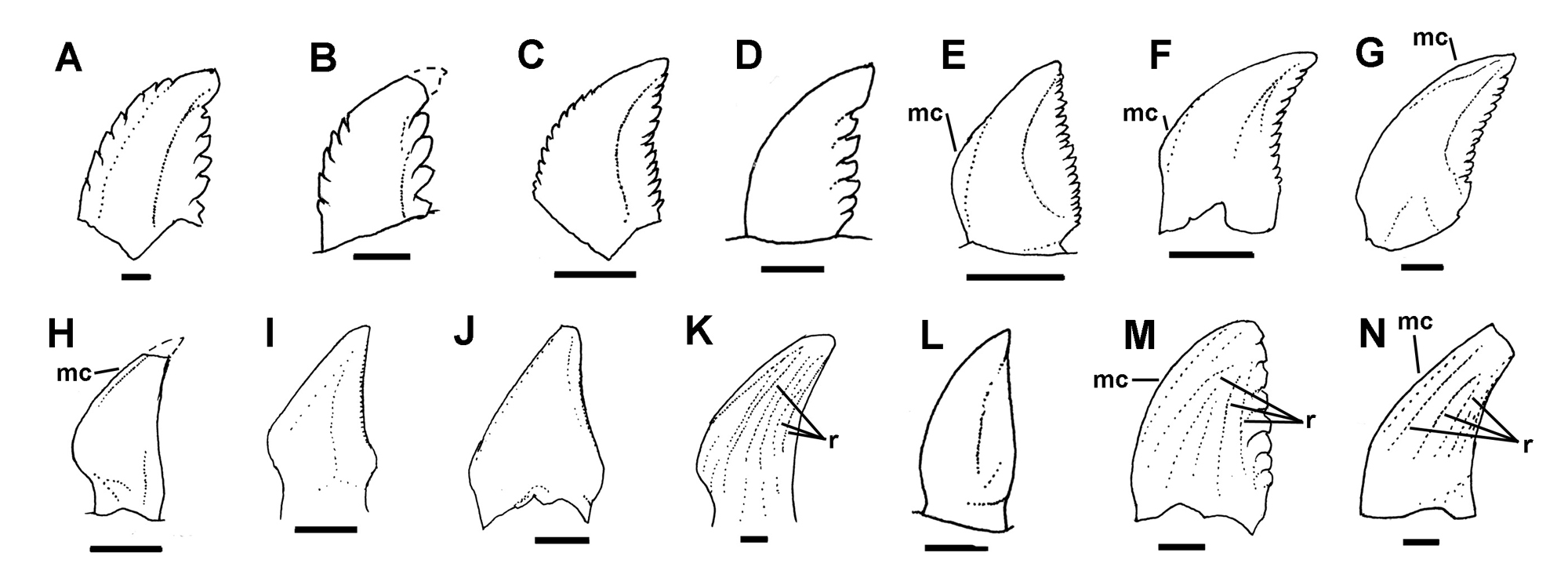
Drawings of tooth crowns from Laurasian troodontids and related forms, including the Troodon formosus holotype (A), shown for comparison; neither Indian tooth is pictured, and crowns I and J are non-theropod teeth. Image credit: Jaime A. Headden / Wikimedia Commons / CC BY 3.0

How Did It Get There?
That’s the other mystery. In the Late Cretaceous, India was an island continent drifting north after breaking away from the rest of Gondwana, so a northern dinosaur family turning up there is a puzzle.
The researchers offer two answers. The troodontid teeth “may reflect either the persistence of a once widespread lineage that became restricted to the Northern Hemisphere following the Laurasia–Gondwana breakup or a later dispersal event from Laurasia to India via Europe and Africa,” they wrote. In other words, troodontids may once have lived across the whole supercontinent and then disappeared from the south everywhere except India, or they may have reached India much later by way of Europe and Africa.
Two teeth are two teeth. But a second specimen from the same site, matched to the same family, makes India’s troodontid claim much harder to dismiss as a one-off (well, literally. It’s a two-off, if anything). As Prasad said in an interview, “even a small bone fragment or isolated tooth on the surface can indicate that a much larger fossil lies buried beneath”, and noted that more finds from older rocks are needed to settle the question. So maybe we’ll find the rest of the animal one day perhaps, in 2047.
The find is reported in a paper published in July in The Anatomical Record. The lead author is Harsha Dhiman of the Indian Institute of Science Education and Research (IISER) Mohali and the University of Delhi’s Department of Geology. The co-authors are Fahad Parvez and Guntupalli V. R. Prasad of the University of Delhi and Anjali Goswami of the Natural History Museum, London.