
Triassic Epidemic: Bone Infection Plagued a Community of Giant Phytosaurs
Paleontologists at IIT Kharagpur have reported what they describe as the first epidemic of persistent, recurrent bone infection in a Late Triassic community of phytosaurs, long-snouted, crocodile-like reptiles that lived more than 200 million years ago. Nine individuals of the giant phytosaur Colossosuchus techniensis, from a bonebed dominated by juveniles in Madhya Pradesh, show diseased bone, most likely caused by the bacterial bone infection osteomyelitis.
A Giant Population of Youngsters
Colossosuchus techniensis was named in 2023 by Debajit Datta and Sanghamitra Ray (Ray is a co-author here as well) from a bonebed in the Upper Triassic Tiki Formation. It lives up to its name: the largest individual is estimated at more than 8 m long, which makes it one of the largest phytosaurs known. Phytosaurs are crocodile-like creatures that are not crocodiles, despite their handsome crocodile-like looks (technically, more ghariyal-like looks).
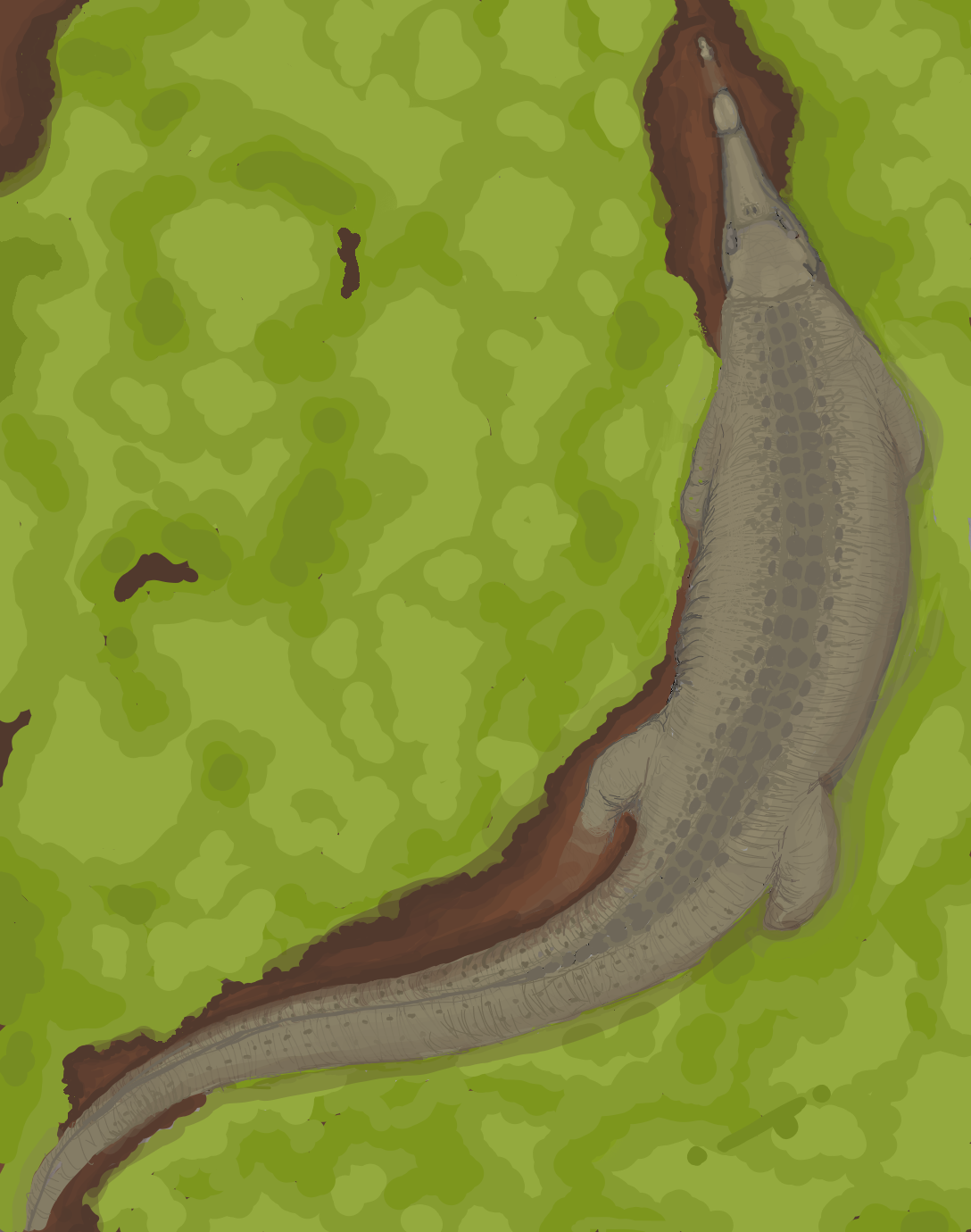
An artist’s reconstruction of Colossosuchus techniensis, the giant phytosaur examined in the bone-infection study. Image credit: DNB XD, CC0 1.0, via Wikimedia Commons.

Most of the animals in the bonebed here were young. An earlier study by the same IIT Kharagpur group described the site as “a juvenile-dominated paleocommunity”.
Sunbursts in the Bone
To look for disease, the authors of this paper, Pratyusha Sarkar and Ray, studied the microscopic structure of long limb bones and ribs from the back. In nine individuals they found aggressive “periosteal growth”, where new bone is laid down rapidly on the outer surface. This formed distinct markings in which the blood-vessel channels fan out “in the form of a sunburst pattern”.
The researchers propose that the community “suffered an epigenetic disease influenced by some exogenous factors and/or environments”, meaning that something outside the animals’ genes, perhaps in their surroundings, influenced it. They reviewed a range of possible diseases. They then compared the fossils with evidence from their closest living relatives, an approach called extant phylogenetic bracketing, and concluded that the most probable cause was “bacterial infection, especially in the form of osteomyelitis”.
An Infection That Kept Coming Back (No, Not Herpes)
In several limb bones, normal and diseased bone tissue alternate, suggesting that animals fell ill, recovered and fell ill again. The researchers concluded that the infection “was persistent and recurrent, and resulted in a suppressed immunodefence system and restricted mobility that ultimately caused the demise of the phytosaur community.”
That is a strong conclusion, as the researchers infer bacterial infection from the changes in the bone tissue. But if the team is right, the Tiki bonebed preserves more than the fossils themselves. It could also have preserved clues for how disease ran through a species in the Triassic. It’s probably too soon to make a pandemic joke. It’s only been 200 million years.
The study, published in The Anatomical Record, is by Pratyusha Sarkar and Sanghamitra Ray of the Department of Geology and Geophysics at the Indian Institute of Technology (IIT) Kharagpur.